
search
Requirements for the design, approval, operation and reclamation of temporary onsite wastewater treatment systems at work camps in Alberta.
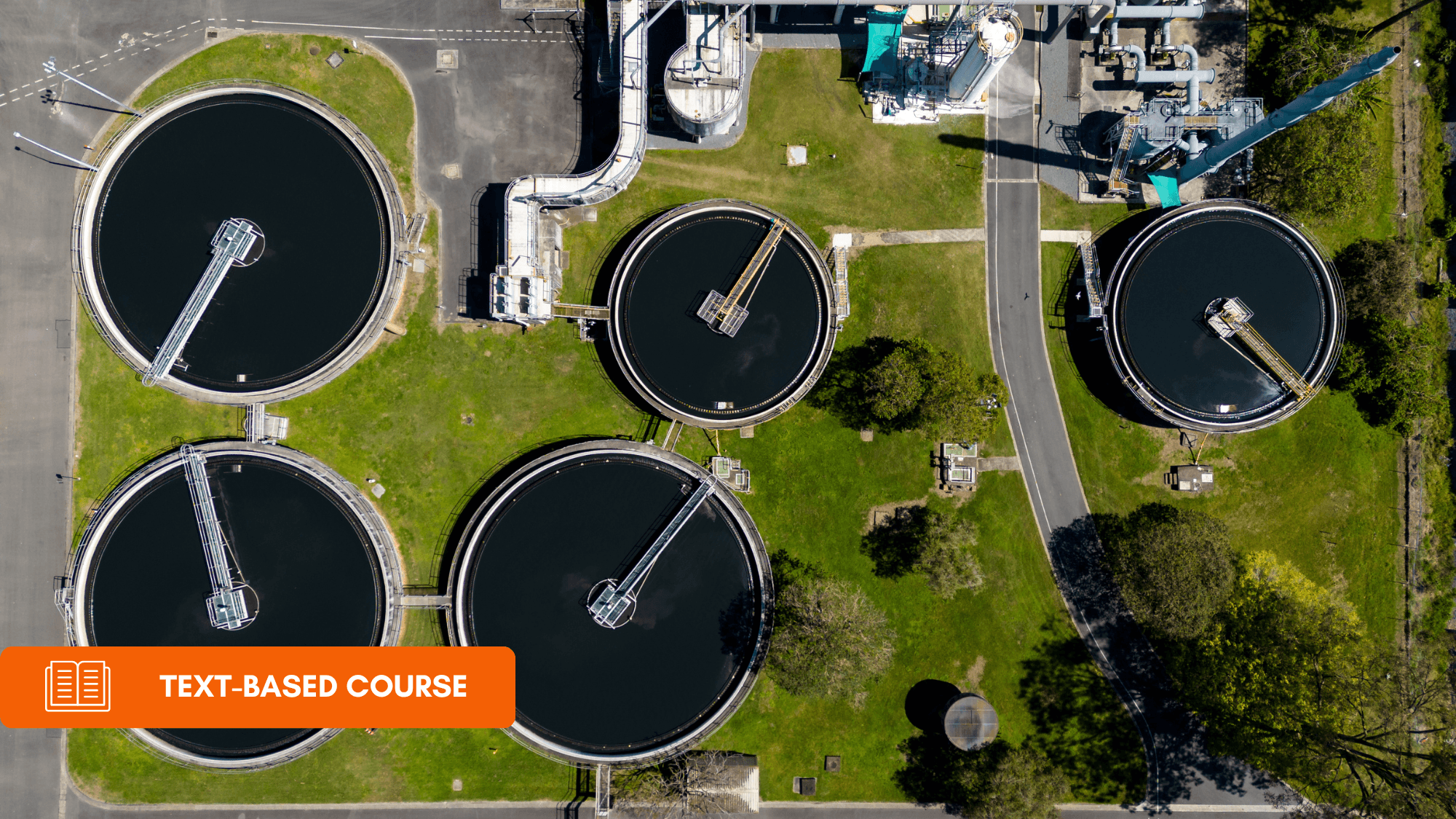
Temporary work camps and work sites in remote parts of Alberta need wastewater systems that protect public health and the environment while being relocated frequently. This course explains the scope of requirements for temporary onsite systems serving camps that generate up to 25 cubic metres of wastewater per day, key definitions, and the approvals involved, including temporary field authorizations on Crown land, equipment variances for treatment plants and sewage holding tanks, management plans, private sewage permits and self-compliance registration under the Safety Codes Act. It then covers site evaluation, soil investigation requirements that depend on camp duration and flow, influent wastewater quality including high strength wastewater from commercial kitchens, and effluent sampling and compliance with carbonaceous biochemical oxygen demand (cBOD5), total suspended solids (TSS) and fecal coliform limits.
System design is addressed through the four governing factors of peak daily volume, camp duration, effluent quality and soil conditions, with worked calculations of organic loading and lateral length for soil treatment areas. The course describes open discharge systems, enhanced surface discharge systems and earthen privies, their siting and separation distances, and the components that make up a temporary system, namely piping, lift stations, holding tanks, packaged wastewater treatment plants and disinfection. It concludes with the management of effluent pooling, site remediation and reclamation, site inspection, annual reporting and records inventory, and the offences, penalties and cancellation of variances that can follow non-compliance.
What Will Be Covered:
Scope of temporary onsite wastewater requirements for work camps and key definitions
Temporary field authorizations, equipment variances, management plans, private sewage permits and self-compliance registration
Site evaluation and soil investigation requirements based on camp duration and peak flow
Influent wastewater quality, high strength wastewater from commercial kitchens and industrial wastewater
Effluent sampling frequency, treatment levels and compliance limits for cBOD5, TSS and fecal coliforms
Design factors and organic loading calculations for sizing soil treatment systems
Open discharge, enhanced surface discharge and earthen privy systems, including separation distances
Piping, lift stations, holding tanks, packaged treatment plants and disinfection
Effluent pooling, site remediation and reclamation when a camp is decommissioned
Site inspection, annual reporting, records, offences, penalties and cancellation of approvals

Professional online education for engineers and technical professionals
Engineering Education Group provides online professional development and continuing education courses for engineers, technical professionals, and industry practitioners. Our programs focus on practical skills, technical knowledge, industry standards, and lifelong learning through flexible and accessible online education.