Learn how stable isotope analysis and structured field sampling are used to trace carbon, nitrogen and phosphorus sources that feed aquatic vegetation growth in irrigation canals.
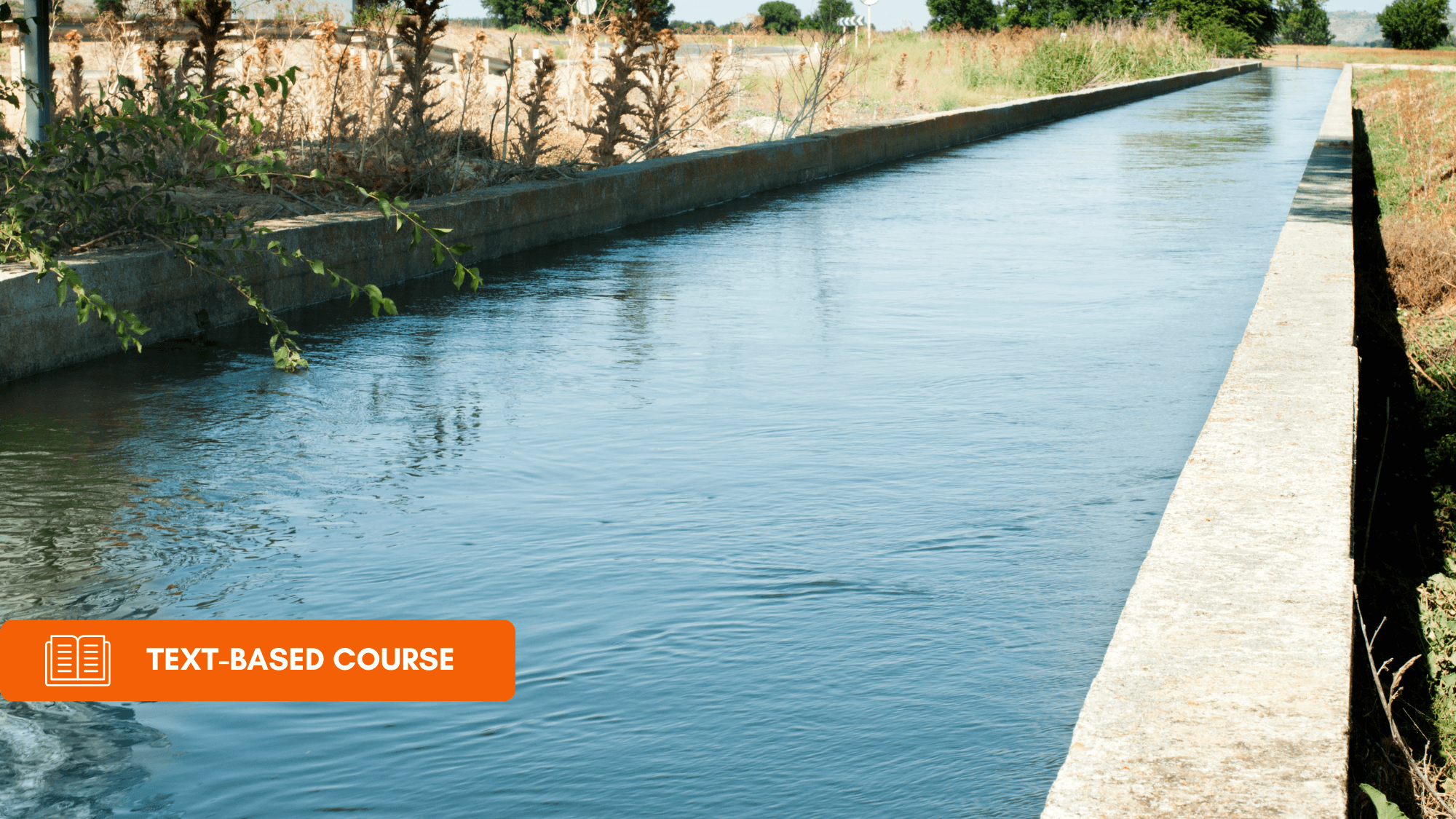
Excessive growth of algae and aquatic plants in irrigation canals blocks intake screens, reduces conveyance capacity and delays water delivery to irrigators, adding significant maintenance costs for irrigation districts. Dissolved nutrients drive much of this growth, yet their sources and fate within canal systems are often unclear. This course introduces stable isotope methods as a practical tool for identifying where nutrients come from and how they are transformed. Learners review isotope fundamentals, delta notation in parts per thousand (permil), international reference standards, and the use of dual nitrate isotopes to distinguish nutrient sources and biological processes such as denitrification and plant uptake.
The course then walks through the design of a multi-district field study in southern Alberta, including canal segment selection by canal type and bed material, site spacing based on nutrient uptake length, and sampling protocols for manure, agricultural soils, livestock catch basins, municipal effluent, surface and tile drainage, periphyton, macrophytes, canal sediment and canal water. Learners examine data analysis approaches for censored water quality data and non-parametric group comparisons, and review the resulting isotopic signatures of carbon and nitrogen sources, sinks and canal water. Practical limits, such as low phosphate concentrations that prevent phosphate isotope analysis, are also discussed for engineers in Canada.
What Will Be Covered:
Impacts of nuisance aquatic vegetation on irrigation canal conveyance and water delivery
Stable isotope fundamentals, delta notation and international reference standards
Dual nitrate isotopes for identifying nitrate sources and denitrification
Selection of canal segments by canal type, bed material and nutrient uptake length
Sampling protocols for manure, soils, catch basins, municipal effluent and drainage water
Sampling of nutrient sinks: periphyton, macrophytes and canal sediment
Canal water sampling, field measurements and quadrat-based vegetation indexing
Statistical treatment of censored data and non-parametric group comparisons
Isotopic signatures of carbon and nitrogen sources, sinks and canal water
Limitations of isotope methods for tracing phosphorus at low concentrations

Leading Global Provider of Cutting-Edge Engineering CPD Courses
The Global Engineering Excellence Institute (GEEI) is a leading provider of Continuing Professional Development (CPD) courses designed to meet the evolving needs of engineers worldwide. Established in 2010, GEEI has a proven track record of delivering high-quality, industry-relevant training that empowers engineering professionals to stay at the forefront of technological advancements and best practices. Our comprehensive course offerings cover a wide range of disciplines, including civil, mechanical, electrical, and software engineering, ensuring that our learners receive the most up-to-date and practical knowledge. With a focus on practical application, GEEI's courses are developed by industry experts and are recognized by leading engineering bodies globally. We are committed to fostering a culture of continuous learning and professional growth, helping engineers achieve their career goals and contribute to the advancement of the engineering profession.
