Learn how docks, boat lifts, mooring buoys, marinas and related structures are regulated and sited on Crown-owned beds and shores of Alberta lakes and rivers.
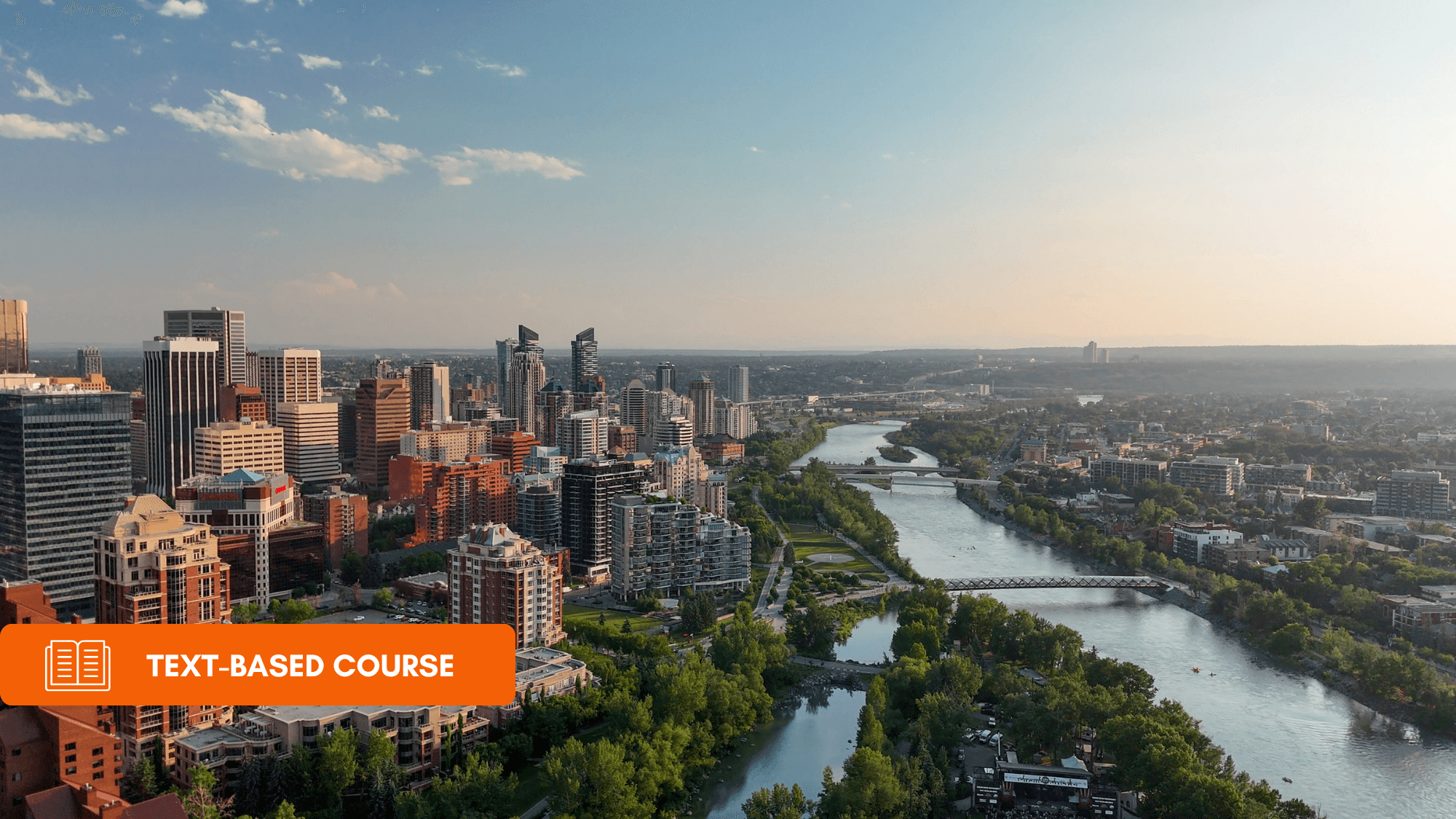
In Alberta, the beds and shores of naturally occurring lakes, rivers and streams are Crown-owned public land, and any dock, boat lift, anchor or buoy placed there must be authorized. This course explains the provincial framework that governs mooring on these lands, including the policy objectives behind it, the management principles that protect public passage, navigation and riparian access, and the two main regulatory instruments: a general permission under a disturbance standard and a site-specific disposition. Learners will see how reservoirs, provincial parks, federal lands and private reservoirs are treated differently, and how environmentally sensitive areas and municipal zoning can restrict mooring altogether.
The course then works through the practical rules that shape dock and buoy design and placement. Topics include apportioning mooring areas to the line of navigation using the extended lot line and coterminous line methods, the rights of waterfront, semi-waterfront and back lot holders, dock dimensions and setbacks, boat lifts and swimming platforms, materials and winter removal, and limits on cutting aquatic vegetation. Learners will also review shared and multi-user docks, mooring fields, swimming areas, control buoys, permanent docks, marinas and dredged channels, and the mooring plan content needed to support an application. The material suits professional engineers who design, permit or review shoreline and lake infrastructure in Alberta.
What Will Be Covered:
Crown ownership of beds and shores and the need for authorization
Policy objectives and management principles for mooring
Disturbance standards versus authorizations, licences and leases
Mooring areas, the line of navigation and lot line apportionment methods
Rights of waterfront, semi-waterfront and back lot holders
Dock dimensions, separations, setbacks, materials and winter storage
Boat lifts, swimming platforms and aquatic vegetation cutting limits
Shared, community and multi-user docks and commercial mooring
Mooring anchors, buoys, mooring fields and swimming areas
Permanent docks, open water and inland marinas, and mooring plans

Leading Global Provider of Cutting-Edge Engineering CPD Courses
The Global Engineering Excellence Institute (GEEI) is a leading provider of Continuing Professional Development (CPD) courses designed to meet the evolving needs of engineers worldwide. Established in 2010, GEEI has a proven track record of delivering high-quality, industry-relevant training that empowers engineering professionals to stay at the forefront of technological advancements and best practices. Our comprehensive course offerings cover a wide range of disciplines, including civil, mechanical, electrical, and software engineering, ensuring that our learners receive the most up-to-date and practical knowledge. With a focus on practical application, GEEI's courses are developed by industry experts and are recognized by leading engineering bodies globally. We are committed to fostering a culture of continuous learning and professional growth, helping engineers achieve their career goals and contribute to the advancement of the engineering profession.
