
search
A practical course on identifying farmstead environmental risks and applying beneficial management practices to protect water wells and to store and handle pesticides, fertilizers and fuels safely.
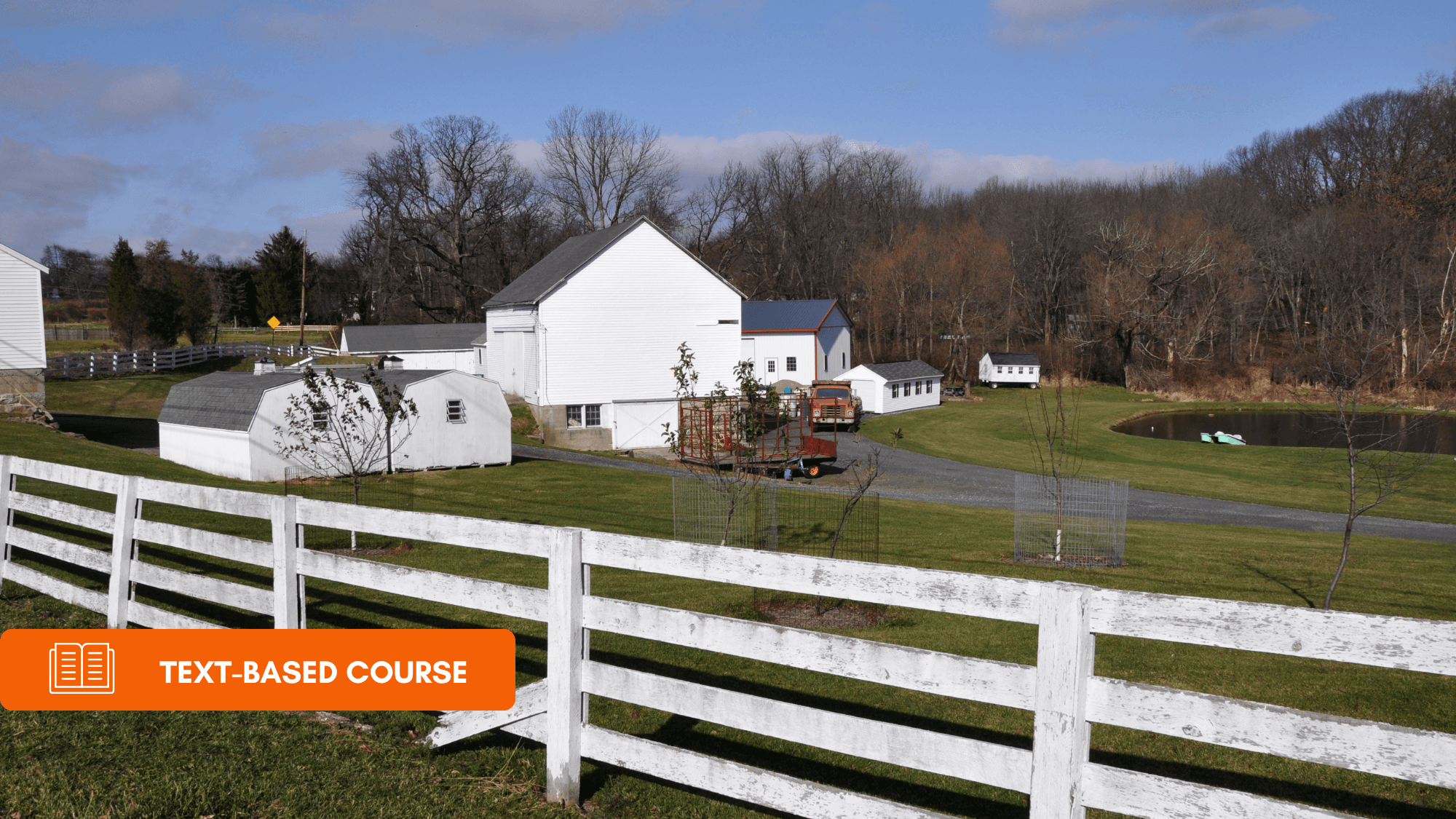
Farmsteads concentrate many activities that can harm soil, air and water when they are poorly sited or managed. This course introduces the source, pathway and receptor model of environmental risk and shows how nutrients, pathogens, hydrocarbons, pesticides, odours, dust, noise and greenhouse gases move through surface runoff, infiltration and groundwater flow to reach people, livestock and ecosystems. Learners work through a simple step-by-step approach for identifying hazards on a site, judging the likelihood and seriousness of each risk, and selecting reasonable beneficial management practices (BMPs) to reduce it, with attention to the federal and Alberta legislation that applies to rural water and chemical use.
The course then addresses the farmstead features that pose the greatest risk to drinking water and the surrounding environment. Topics include water well siting, casing and annulus sealing, well pits, flowing wells, abandoned well decommissioning, dugouts, cisterns and water testing. It covers pesticide storage, mixing, sprayer cleanout, transport and spill planning; the handling of anhydrous ammonia, dry and liquid fertilizers and the 4R nutrient stewardship framework; and fuel storage design, including separation distances, tank stands, secondary containment, evaporation losses, dispensing practice, leak detection, inventory control and fire extinguisher classes. The content suits engineers who advise rural clients, design agricultural facilities or review environmental risk on farm properties.
What Will Be Covered:
Source, pathway and receptor model of environmental risk on farmsteads
Hazards from nutrients, pathogens, hydrocarbons, pesticides, odour, dust and greenhouse gases
Surface and groundwater pathways and the effects on humans, livestock and biodiversity
Water well siting, construction, casing seals, well pits, flowing wells and decommissioning
Dugouts, cisterns, pipelines, natural water sources and water quality testing
Pesticide storage, mixing, sprayer cleanout, transport, training and emergency planning
Anhydrous ammonia, dry and liquid fertilizer storage and handling, and 4R nutrient stewardship
Fuel tank siting, stands, secondary containment, evaporation control and dispensing practice
Leak detection, fuel inventory control and fire extinguisher classes
Federal and Alberta legislation relevant to farmstead water, chemicals and fuels

Leading Global Provider of Cutting-Edge Engineering CPD Courses
The Global Engineering Excellence Institute (GEEI) is a leading provider of Continuing Professional Development (CPD) courses designed to meet the evolving needs of engineers worldwide. Established in 2010, GEEI has a proven track record of delivering high-quality, industry-relevant training that empowers engineering professionals to stay at the forefront of technological advancements and best practices. Our comprehensive course offerings cover a wide range of disciplines, including civil, mechanical, electrical, and software engineering, ensuring that our learners receive the most up-to-date and practical knowledge. With a focus on practical application, GEEI's courses are developed by industry experts and are recognized by leading engineering bodies globally. We are committed to fostering a culture of continuous learning and professional growth, helping engineers achieve their career goals and contribute to the advancement of the engineering profession.